My Word Book
3rd Grade Vocabulary Words
313 words from the year, A to Z.
313 words
A
- abstract nounELAFirst used: Week 5
- A noun that names an idea or feeling you cannot see or touch.
- Kindness and courage are abstract nouns.
- adaptationScienceFirst used: Week 11
- A body part or behavior that helps a living thing survive where it lives.
- A cactus's thick, waxy stem is an adaptation for living in a dry desert.
- adjectiveELAFirst used: Week 2
- A word that describes a noun.
- In "the brave knight," brave is an adjective.
- adverbELAFirst used: Week 2
- A word that tells how, when or where something happens.
- In "the cat crept slowly," slowly is an adverb.
- air pressureScienceFirst used: Week 25
- The push of air on everything around it.
- Falling air pressure can mean stormy weather is coming.
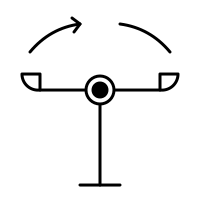 anemometerScienceFirst used: Week 19
- A tool that measures how fast the wind is blowing.
- The cups on the anemometer spun fast in the strong wind.
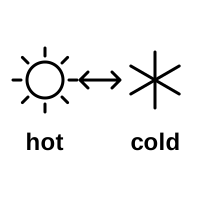 antonymELAFirst used: Week 22
- A word that means the opposite of another word.
- Hot and cold are antonyms.
- apostropheELAFirst used: Week 2
- A mark (') used in contractions and to show that something belongs to someone.
- The apostrophe in Maya's hat shows the hat belongs to Maya.
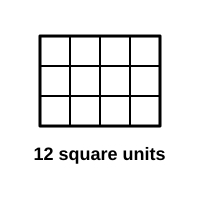 areaMathFirst used: Week 28
- The amount of flat space a shape covers, measured in square units.
- The rug covers 3 rows of 4 squares, so its area is 12 square units.
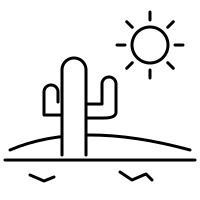 aridScienceFirst used: Week 20
- Very dry, with little rain most years.
- An arid desert may get only a little rain in a whole year.
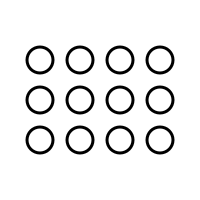 arrayMathFirst used: Week 4
- Objects arranged in equal rows and equal columns.
- An array of 3 rows of 5 stars shows 3 × 5 = 15.
- associative propertyMathFirst used: Week 13
- Changing how three factors are grouped does not change the product.
- (2 × 5) × 7 and 2 × (5 × 7) both equal 70.
- author's purposeELAFirst used: Week 24
- The reason an author writes a text, such as to teach, entertain or persuade.
- The author's purpose in the bee article is to teach how bees make honey.
B
- balanced forcesScienceFirst used: Week 2
- Forces that are equal in strength and push or pull in opposite directions.
- In a tied tug-of-war, the forces are balanced, so the rope does not move.
 ballotSocial StudiesFirst used: Week 22
- The paper or screen where a voter marks a choice.
- Each family member marked a secret ballot.
- bankSocial StudiesFirst used: Week 25
- A business that keeps people's money safe and makes loans.
- I put my birthday money in a savings account at the bank.
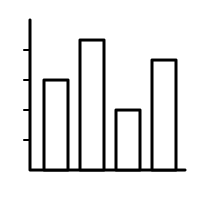 bar graphMathFirst used: Week 35
- A graph that uses bars of different lengths to show and compare data.
- Our bar graph shows that soccer got the most votes.
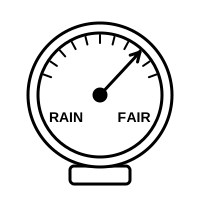 barometerScienceFirst used: Week 25
- A tool that measures air pressure.
- The barometer showed that the air pressure was dropping.
- base wordELAFirst used: Week 13
- A word that a prefix or suffix can be added to.
- The base word in unhappy is happy.
- behaviorScienceFirst used: Week 11
- Something a living thing does, like hunting at night or moving south for winter.
- Hiding in its shell is a behavior that keeps a turtle safe.
- billSocial StudiesFirst used: Week 20
- A written plan for a new law that lawmakers vote on.
- Congress voted on the bill.
- Bill of RightsSocial StudiesFirst used: Week 21
- The first ten amendments to the Constitution, which protect people's rights.
- The Bill of Rights protects freedom of speech.
- branch (of government)Social StudiesFirst used: Week 20
- One part of a government with its own job.
- The U.S. government has three branches.
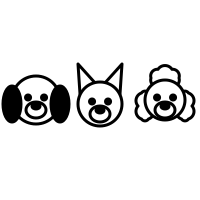 breedScienceFirst used: Week 30
- A group of animals in one species that people raised to have certain traits.
- Poodles and beagles are two breeds of dog.
- budgetSocial StudiesFirst used: Week 24
- A plan for how to spend and save money.
- My budget saves some money each week for a new book.
C
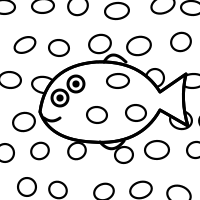 camouflageScienceFirst used: Week 14
- Colors or patterns that help an animal blend in with its surroundings.
- A green caterpillar's camouflage hides it on a leaf.
- capital resourceSocial StudiesFirst used: Week 25
- A tool or machine people make and use to produce goods or services.
- A baker's oven is a capital resource.
- captionELAFirst used: Week 6
- Words under a picture that tell what it shows.
- The caption under the photo told me the frog's name.
- cardinal directionsSocial StudiesFirst used: Week 3
- The four main directions: north, south, east and west.
- I used the cardinal directions to tell where the park is.
- cause and effectELAFirst used: Week 7
- How one event (the cause) makes another event (the effect) happen.
- The cause was heavy rain, and the effect was a muddy field.
- central messageELAFirst used: Week 1
- The big lesson or idea a story teaches.
- The central message of the fable is that slow and steady can win.
- characterELAFirst used: Week 1
- A person or animal in a story.
- The main character in my book is a brave mouse.
- character traitELAFirst used: Week 2
- A word that tells what a character is like on the inside.
- Kind and honest are character traits.
- cirrusScienceFirst used: Week 25
- Thin, wispy clouds high in the sky.
- Cirrus clouds look like white feathers.
- citizenSocial StudiesFirst used: Week 21
- A person who is a member of a country.
- U.S. citizens can vote when they turn 18.
- civic actionSocial StudiesFirst used: Week 33
- Working to help solve a problem in your community.
- Our civic action project made the playground cleaner.
- climateScienceFirst used: Week 20
- The usual weather of a place over many years.
- The climate in the Sonoran Desert is hot and dry.
- closed syllableELAFirst used: Week 1
- A syllable that ends with a consonant, so the vowel sound is short.
- Cap is a closed syllable, so the a is short.
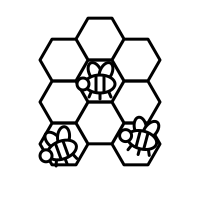 colonyScienceFirst used: Week 13
- A large group of animals of the same kind that live together.
- Honeybees live in a colony with one queen.
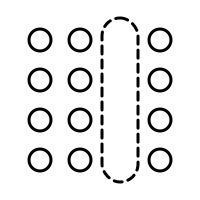 columnMathFirst used: Week 2
- A line of things that goes straight up and down.
- When I add, I line up the ones in one column and the tens in the next.
- communitySocial StudiesFirst used: Week 1
- A group of people who live, work or play in the same place.
- Our community shares a library and a park.
- commutative propertyMathFirst used: Week 4
- Changing the order of the factors does not change the product.
- 4 × 6 = 24 and 6 × 4 = 24.
- comparativeELAFirst used: Week 19
- An adjective that compares two things, often ending in -er.
- Faster is a comparative: a cheetah is faster than a horse.
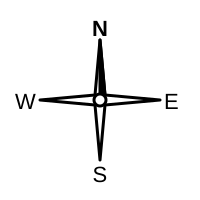 compass roseSocial StudiesFirst used: Week 3
- A symbol on a map that shows directions.
- The compass rose shows that north is at the top of the map.
- complex sentenceELAFirst used: Week 13
- A sentence that joins ideas with a word like because, when, after or if.
- When the bell rang, we ran outside.
- compound sentenceELAFirst used: Week 13
- Two complete sentences joined by a comma and a word like and, but or so.
- It rained all morning, so we played inside.
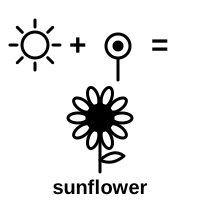 compound wordELAFirst used: Week 22
- A word made by joining two smaller words.
- Sunflower is a compound word made of sun and flower.
- conclusionELAFirst used: Week 8
- The ending of a piece of writing that wraps up the main idea.
- My conclusion told my opinion one more time in new words.
- confederacySocial StudiesFirst used: Week 12
- A group of nations that join together.
- The Haudenosaunee Confederacy joins six nations.
- conflictSocial StudiesFirst used: Week 7
- A serious disagreement or fight between people or groups.
- Arguments over land led to conflict between settlers and Native nations.
- CongressSocial StudiesFirst used: Week 20
- The part of the U.S. government that makes laws.
- Congress meets in Washington, D.C.
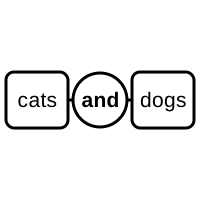 conjunctionELAFirst used: Week 8
- A word that joins words or sentences, like and, but, or, so or because.
- In "I was tired, so I rested," so is a conjunction.
- ConstitutionSocial StudiesFirst used: Week 20
- The written plan for the United States government.
- The Constitution was written in 1787.
- constraintScienceFirst used: Week 7
- A limit on a design, such as time, money or materials.
- One constraint was that we could use only one magnet.
- consumer (in an ecosystem)ScienceFirst used: Week 10
- A living thing that eats other living things for food.
- A rabbit is a consumer because it eats plants.
- consumer (in economics)Social StudiesFirst used: Week 25
- A person who buys or uses goods and services.
- I am a consumer when I buy a snack.
- context clueELAFirst used: Week 22
- Words near a new word that help you figure out what it means.
- The context clue "as big as a house" helped me learn that enormous means very big.
- continentSocial StudiesFirst used: Week 3
- One of the seven large areas of land on Earth.
- We live on the continent of North America.
- contractionELAFirst used: Week 28
- Two words joined into one, with an apostrophe in place of missing letters.
- Don't is a contraction of do not.
- cooperationSocial StudiesFirst used: Week 7
- Working together to reach a goal.
- Cooperation helped the two groups trade and share food.
- councilSocial StudiesFirst used: Week 19
- A group of people who make laws and decisions for a town or city.
- The town council voted to build a new sidewalk.
- criteriaScienceFirst used: Week 7
- The goals a design must meet to be successful.
- Our criteria said the latch must keep the door shut.
- cultureSocial StudiesFirst used: Week 15
- The way of life of a group of people.
- Food, music and language are all part of a culture.
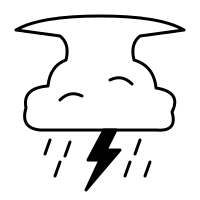 cumulonimbusScienceFirst used: Week 21
- A tall, dark cloud that brings thunderstorms.
- We went inside when we saw a cumulonimbus cloud growing.
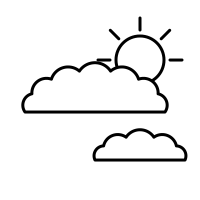 cumulusScienceFirst used: Week 25
- Puffy white clouds that often mean fair weather.
- The cumulus clouds looked like cotton balls.
D
- dataScienceFirst used: Week 3
- Facts or measurements collected to answer a question.
- We recorded our data in a table.
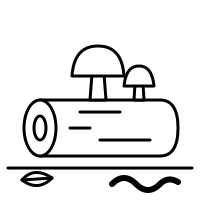 decomposerScienceFirst used: Week 10
- A living thing that breaks down dead plants and animals.
- Mushrooms are decomposers that break down fallen logs.
- demandSocial StudiesFirst used: Week 26
- How much of something buyers want.
- On hot days, the demand for lemonade goes up.
- denominatorMathFirst used: Week 19
- The bottom number in a fraction. It tells how many equal parts make the whole.
- In 3/4, the denominator is 4, so the whole has 4 equal parts.
- depositSocial StudiesFirst used: Week 30
- Money put into a bank account.
- I made a deposit of 5 dollars into my savings account.
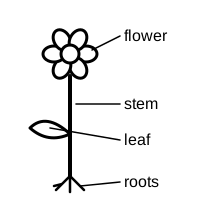 diagramELAFirst used: Week 6
- A drawing with labels that shows the parts of something.
- The diagram shows the three body parts of an ant.
- dialogueELAFirst used: Week 11
- The words characters say to each other in a story.
- In the dialogue, Sam called, "Wait for me!"
- differenceMathFirst used: Week 3
- The answer when you subtract one number from another.
- The difference between 500 and 175 is 325.
- digitMathFirst used: Week 1
- Any one of the ten symbols 0 to 9 used to write numbers.
- The number 507 has three digits: 5, 0 and 7.
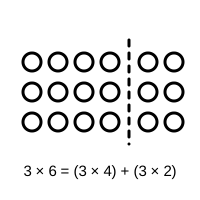 distributive propertyMathFirst used: Week 13
- Breaking a factor into parts, multiplying each part, then adding the products.
- 7 × 8 = (7 × 5) + (7 × 3) = 35 + 21 = 56.
- dividendMathFirst used: Week 10
- The number being divided in a division problem.
- In 24 ÷ 6 = 4, the dividend is 24.
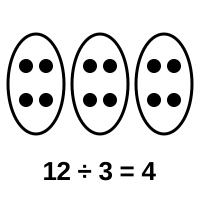 divisionMathFirst used: Week 10
- Splitting a total into equal groups or finding how many equal groups there are.
- We shared 18 grapes among 3 friends: 18 ÷ 3 = 6 grapes each.
- divisorMathFirst used: Week 10
- The number you divide by in a division problem.
- In 24 ÷ 6 = 4, the divisor is 6.
E
- economicsSocial StudiesFirst used: Week 24
- The study of how people use limited things to meet their needs and wants.
- Economics helps us think about choices with money and time.
- ecosystemScienceFirst used: Week 10
- All the living and nonliving things in one place and how they affect each other.
- A pond is an ecosystem with frogs, fish, plants and water.
- editELAFirst used: Week 11
- To fix mistakes in spelling, capitals, punctuation and grammar.
- I edit my story by checking every capital letter.
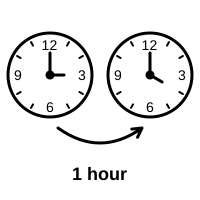 elapsed timeMathFirst used: Week 25
- The amount of time that passes from the start to the end of something.
- Practice ran from 4:10 to 4:55, an elapsed time of 45 minutes.
- electionSocial StudiesFirst used: Week 22
- A time when people vote to choose leaders or decide questions.
- Our class held an election to choose a name for our fish.
- energyScienceFirst used: Week 10
- What living things get from food to grow, move and live.
- In a food chain, energy moves from the grass to the rabbit.
 engineerScienceFirst used: Week 7
- A person who uses science to design solutions to problems.
- An engineer designed a stronger latch for the door.
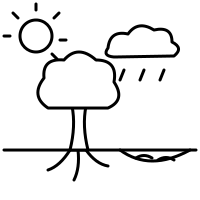 environmentScienceFirst used: Week 17
- Everything around a living thing, such as water, light, soil and weather.
- A plant's environment includes the light, water and soil around it.
- equal groupsMathFirst used: Week 4
- Groups that each have the same number of things.
- There are 5 equal groups of 2 socks, so there are 10 socks.
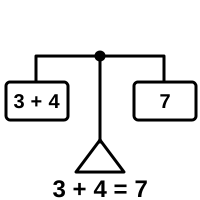 equationMathFirst used: Week 9
- A math sentence with an equal sign that shows two amounts are the same.
- 3 × 7 = 21 is an equation.
 equatorScienceFirst used: Week 20
- An imaginary line around the middle of Earth.
- Places near the equator are warm all year.
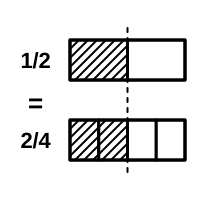 equivalent fractionsMathFirst used: Week 20
- Fractions that name the same amount, like 1/2 and 2/4.
- 1/2 and 3/6 are equivalent fractions because they cover the same length.
- estimateMathFirst used: Week 2
- A close guess about an amount or an answer, found with easy numbers.
- To estimate 298 + 405, I think 300 + 400 = 700.
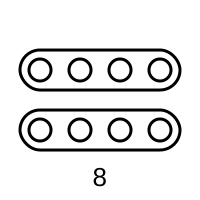 even numberMathFirst used: Week 16
- A whole number that can be split into two equal groups with none left over.
- Every product in the ×2 row is an even number.
- evidenceELAFirst used: Week 2
- Words or facts from a text that show an answer is true.
- My evidence is the sentence that says the fox was hungry.
- executive branchSocial StudiesFirst used: Week 20
- The branch of government that carries out laws, led by the President.
- The President leads the executive branch.
- expanded formMathFirst used: Week 1
- A way to write a number as the sum of the values of its digits.
- The expanded form of 472 is 400 + 70 + 2.
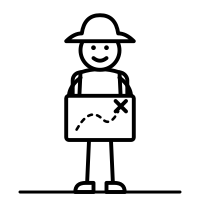 explorerSocial StudiesFirst used: Week 7
- A person who travels to a place to learn about it or find something.
- Explorers sailed across the ocean looking for new trade routes.
- exportSocial StudiesFirst used: Week 26
- A good a country sends to another country to sell.
- Wheat is an export of the United States.
F
- fableELAFirst used: Week 1
- A very short story, often with talking animals, that teaches a lesson.
- In the fable, the ant works hard while the grasshopper plays.
- fact familyMathFirst used: Week 10
- A set of related multiplication and division facts that use the same three numbers.
- 3 × 8 = 24, 8 × 3 = 24, 24 ÷ 3 = 8 and 24 ÷ 8 = 3 make a fact family.
- factorMathFirst used: Week 4
- A number that is multiplied by another number.
- In 6 × 4 = 24, the factors are 6 and 4.
- fair testScienceFirst used: Week 3
- A test where only one thing is changed and everything else stays the same.
- In our fair test, we changed only the surface the car rolled on.
- fictionELAFirst used: Week 6
- Writing that tells a made-up story.
- My chapter book about a talking dog is fiction.
- folktaleELAFirst used: Week 4
- An old story that people told aloud for many years before it was written down.
- Grandparents told the folktale to children for hundreds of years.
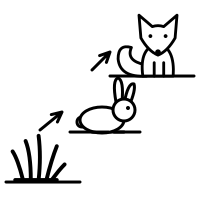 food chainScienceFirst used: Week 12
- A path that shows how energy moves from one living thing to another.
- In one food chain, grass is eaten by a rabbit, and the rabbit is eaten by a fox.
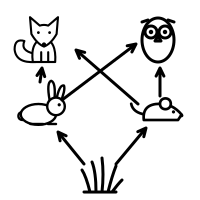 food webScienceFirst used: Week 12
- Many food chains in one place connected together.
- Our food web showed that owls and foxes both eat mice.
- forecastScienceFirst used: Week 25
- A prediction of what the weather will be.
- The forecast says it will rain tomorrow.
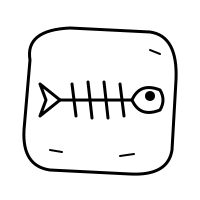 fossilScienceFirst used: Week 33
- The remains or traces of a living thing from long ago, often kept in rock.
- We found a fossil of a shell in the rock.
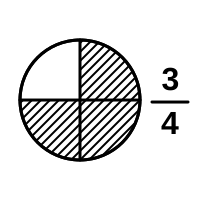 fractionMathFirst used: Week 19
- A number that names equal parts of a whole, like 3/4.
- Our pizza had 8 equal slices, and I ate 3/8 of it.
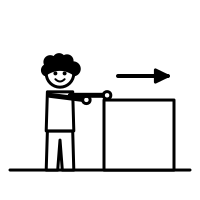
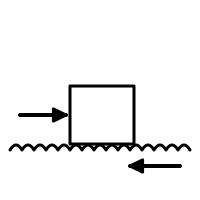 frictionScienceFirst used: Week 3
- A force that slows things down when two surfaces rub together.
- A rug has more friction than ice, so the toy car stops sooner.
G
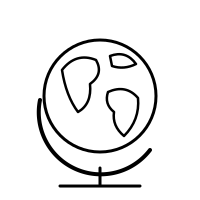 globeSocial StudiesFirst used: Week 3
- A round model of Earth.
- On the globe, I found all seven continents.
- glossaryELAFirst used: Week 1
- A list of special words and their meanings at the back of a book.
- I checked the glossary to learn what nectar means.
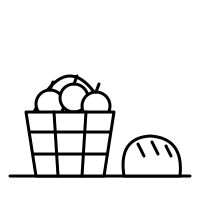 goodsSocial StudiesFirst used: Week 13
- Things people make or grow that can be bought and sold.
- Food, clothes and toys are goods that often travel by truck or ship.
- governmentSocial StudiesFirst used: Week 19
- A group of people who make and carry out rules and laws for a place.
- Our state government takes care of the state parks.
- gramMathFirst used: Week 26
- A unit for measuring the mass of light objects.
- A paper clip has a mass of about 1 gram.
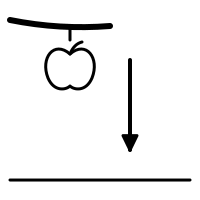 gravityScienceFirst used: Week 1
- A pull that brings things down toward the ground.
- Gravity pulled the ball back down.
H
- habitatScienceFirst used: Week 11
- The place where a plant or animal lives and gets what it needs.
- A pond is a good habitat for a frog.
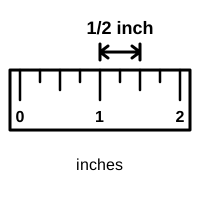 half inchMathFirst used: Week 24
- Half of an inch; the mark halfway between two inch marks on a ruler.
- The crayon is 3 and a half inches long, to the nearest half inch.
- hazardScienceFirst used: Week 21
- Something in nature, like a storm or flood, that can cause harm.
- Lightning is a weather hazard.
- headingELAFirst used: Week 6
- A title at the top of a section that tells what the section is about.
- The heading "What Bees Eat" told me what that part was about.
- hexagonMathFirst used: Week 33
- A polygon with 6 sides.
- Each cell in a honeycomb has the shape of a hexagon.
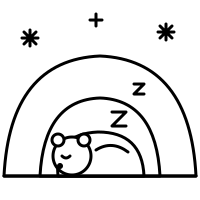 hibernateScienceFirst used: Week 11
- To rest deeply through the winter with the body slowed down.
- Groundhogs hibernate during the winter.
- homelandSocial StudiesFirst used: Week 6
- The land where a people has lived for a very long time.
- The Lenape homeland includes the land where New York City is today.
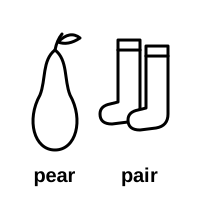 homophoneELAFirst used: Week 27
- Words that sound the same but have different spellings and meanings.
- There, their and they're are homophones.
- human resourceSocial StudiesFirst used: Week 25
- A worker and the skills they use to make goods or services.
- The baker's skill at making bread is a human resource.
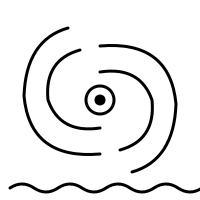 hurricaneScienceFirst used: Week 21
- A huge spinning storm that forms over warm ocean water.
- The hurricane brought strong winds and heavy rain to the coast.
I
- imageryELAFirst used: Week 15
- Words that help you picture something using your senses.
- The imagery in the poem helped me hear the crunchy leaves.
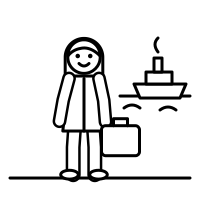 immigrantSocial StudiesFirst used: Week 16
- A person who moves to a new country to live there.
- My neighbor is an immigrant from Brazil.
- immigrationSocial StudiesFirst used: Week 16
- Moving to a new country to live there.
- Immigration has brought people from all over the world to the United States.
- importSocial StudiesFirst used: Week 26
- A good that comes into a country from another country.
- Most bananas sold in U.S. stores are imports.
- incomeSocial StudiesFirst used: Week 30
- Money a person earns, usually by working.
- Mr. Lee earns income by fixing bikes.
- indexELAFirst used: Week 6
- An ABC list at the back of a book that shows where topics are.
- The index told me that hives are on page 5.
- inferenceELAFirst used: Week 22
- A smart guess you make using text clues and what you already know.
- I made an inference that it rained because the umbrella was wet.
- inherited traitScienceFirst used: Week 28
- A trait passed from parents to their young.
- A zebra's stripes are an inherited trait.
- instinctScienceFirst used: Week 11
- A behavior an animal does without being taught.
- A spider spins its web by instinct.
- interdependenceSocial StudiesFirst used: Week 28
- Depending on each other for goods and services.
- Farmers and truck drivers show interdependence: each needs the other's work.
- interestSocial StudiesFirst used: Week 25
- Extra money a bank pays people for keeping savings there.
- My savings account earned a little interest.
- introductionELAFirst used: Week 19
- The beginning of a piece of writing that hooks the reader and names the topic.
- My introduction asked a question to hook the reader.
- inverse operationsMathFirst used: Week 10
- Operations that undo each other, like multiplication and division.
- Since 5 × 6 = 30, I know 30 ÷ 6 = 5.
- irregular verbELAFirst used: Week 10
- A verb that changes its spelling in the past tense instead of adding -ed.
- Run is an irregular verb because its past tense is ran.
J
- judicial branchSocial StudiesFirst used: Week 20
- The branch of government made of courts that decide what laws mean.
- The Supreme Court is part of the judicial branch.
K
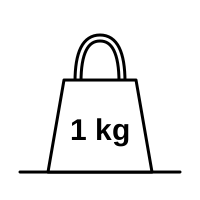 kilogramMathFirst used: Week 26
- A unit for measuring the mass of heavier objects.
- A big bag of rice has a mass of about 5 kilograms.
L
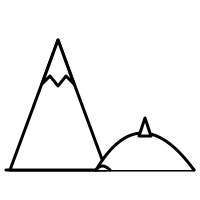 landformSocial StudiesFirst used: Week 4
- A natural shape of the land, like a hill or a valley.
- A mountain is the tallest kind of landform.
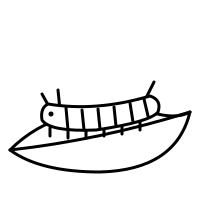 larvaScienceFirst used: Week 15
- The young, worm-like stage of some insects, like a caterpillar.
- The monarch larva ate milkweed leaves.
- lawSocial StudiesFirst used: Week 19
- A rule that everyone in a place must follow.
- A law says drivers must stop at red lights.
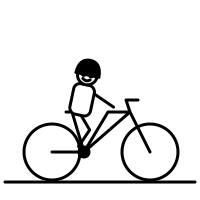 learned behaviorScienceFirst used: Week 29
- Something a living thing learns to do by watching, practice or being taught.
- A dog that learns to sit when asked shows a learned behavior.
- legislative branchSocial StudiesFirst used: Week 20
- The branch of government that makes laws.
- Congress is the legislative branch.
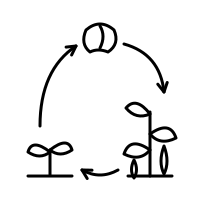 life cycleScienceFirst used: Week 15
- The stages a living thing goes through as it grows, changes and has young.
- A frog's life cycle goes from egg to tadpole to adult frog.
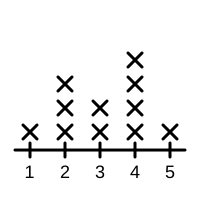 line plotMathFirst used: Week 24
- A number line with X marks that show how often each value appears in data.
- Each X on our line plot stands for one leaf we measured.
- linking wordELAFirst used: Week 8
- A word or phrase that connects ideas, like because, also or for example.
- I used the linking word also to add my second reason.
- liquid volumeMathFirst used: Week 26
- How much liquid a container holds.
- The pitcher has a liquid volume of 2 liters.
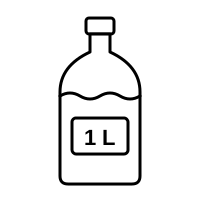 literMathFirst used: Week 26
- A unit for measuring larger amounts of liquid.
- A large water bottle holds about 1 liter.
- local governmentSocial StudiesFirst used: Week 19
- The government of a city, town, village or county.
- Our local government fixes the roads.
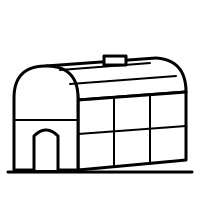 longhouseSocial StudiesFirst used: Week 6
- A long, bark-covered house built by Haudenosaunee people for several families.
- Today, Haudenosaunee communities still gather in longhouses for ceremonies.
M
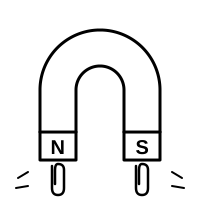 magnetScienceFirst used: Week 4
- An object that pulls on iron and steel and can attract or repel other magnets.
- The magnet picked up the steel paper clips.
- main ideaELAFirst used: Week 7
- What a paragraph or text is mostly about.
- The main idea of the paragraph is that owls hunt at night.
- majority ruleSocial StudiesFirst used: Week 22
- A way of deciding in which the choice with more than half the votes wins.
- With majority rule, pizza won with 4 of the 7 votes.
- map keySocial StudiesFirst used: Week 3
- The part of a map that tells what its symbols mean; also called a legend.
- The map key shows that a tent means a campground.
- map scaleSocial StudiesFirst used: Week 3
- A line on a map that shows how map distance compares to real distance.
- The map scale shows that 1 inch stands for 10 miles.
 marketSocial StudiesFirst used: Week 26
- Any place where buyers and sellers trade.
- We bought peaches at the farmers market.
- massMathFirst used: Week 26
- How much matter, or stuff, is in an object.
- A grape has less mass than an apple.
- mayorSocial StudiesFirst used: Week 19
- The leader of a city or town government.
- The mayor cut the ribbon at the new library.
- metamorphosisScienceFirst used: Week 15
- A big change in body form as an animal grows.
- A caterpillar goes through metamorphosis to become a butterfly.
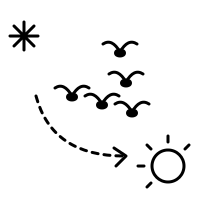 migrateScienceFirst used: Week 11
- To move from one place to another when the seasons change.
- Many geese migrate south for the winter.
- milliliterMathFirst used: Week 26
- A unit for measuring very small amounts of liquid.
- A teaspoon holds about 5 milliliters of water.
 modelScienceFirst used: Week 17
- A smaller or simpler copy of something real that helps us understand it.
- We built a model of a pond ecosystem in a jar.
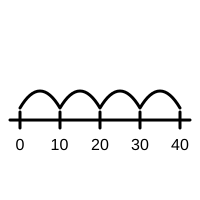 multiple of 10MathFirst used: Week 16
- A number you say when you count by tens, like 20, 50 or 90.
- 60 is a multiple of 10, so 4 × 60 is 4 × 6 tens, or 240.
- multiplicationMathFirst used: Week 4
- Putting together equal groups to find how many in all.
- 4 × 3 = 12 is multiplication: 4 groups of 3 make 12.
- mythELAFirst used: Week 4
- A very old story that explains something in nature, like the seasons.
- The myth tells why the sun moves across the sky.
N
- narrativeELAFirst used: Week 10
- Writing that tells a story, real or made up, with events in order.
- My narrative tells about the day I lost my tooth.
- narratorELAFirst used: Week 10
- The one who tells a story.
- In my story about the beach, I am the narrator.
- Native nationSocial StudiesFirst used: Week 6
- A Native American or Alaska Native people with its own government and way of life.
- The Cherokee Nation is a Native nation with its own government.
- natural resourceSocial StudiesFirst used: Week 4
- Something useful that comes from nature, like water, trees or soil.
- Trees are a natural resource used to make paper.
- needSocial StudiesFirst used: Week 1
- Something people must have to live, like food, water and shelter.
- Clean water is a need for every community.
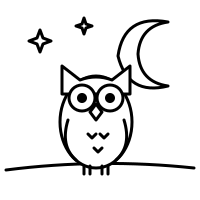 nocturnalScienceFirst used: Week 11
- Active at night and resting during the day.
- Owls are nocturnal, so they hunt at night.
- non-contact forceScienceFirst used: Week 4
- A push or pull that works without touching, like a magnet's pull.
- A magnet's pull on a paper clip is a non-contact force.
- nonfictionELAFirst used: Week 6
- Writing that gives true facts about real people, places and things.
- A book about volcanoes is nonfiction.
- nonliteralELAFirst used: Week 1
- Words that do not mean exactly what they say.
- "It's raining cats and dogs" is nonliteral; it means it is raining hard.
- nounELAFirst used: Week 2
- A word that names a person, place, thing or idea.
- Dog, park and kindness are all nouns.
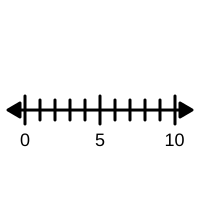 number lineMathFirst used: Week 1
- A line with numbers marked in order at equal spaces.
- I placed 47 on the number line between 40 and 50.
- numeratorMathFirst used: Week 19
- The top number in a fraction. It tells how many equal parts are counted.
- In 3/4, the numerator is 3.
O
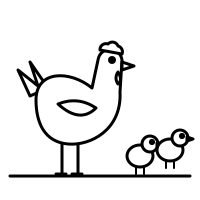 offspringScienceFirst used: Week 28
- The young of a living thing.
- The cat's offspring all had striped fur.
- open syllableELAFirst used: Week 7
- A syllable that ends with a vowel, so the vowel usually says its name.
- In robot, the first syllable, ro, is an open syllable.
 opinionELAFirst used: Week 8
- What a person thinks or believes about something. Others may disagree.
- My opinion is that summer is the best season.
- opportunity costSocial StudiesFirst used: Week 24
- The next-best thing you give up when you make a choice.
- When I chose the zoo, the opportunity cost was the movie.
P
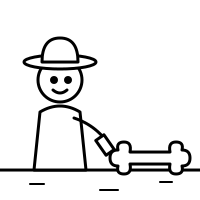 paleontologistScienceFirst used: Week 33
- A scientist who studies fossils.
- The paleontologist carefully dug up a dinosaur bone.
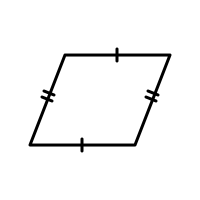 parallelogramMathFirst used: Week 34
- A quadrilateral whose opposite sides are the same length and run the same direction.
- Every rectangle is also a parallelogram.
- paraphraseELAFirst used: Week 3
- To tell an idea from a text in your own words.
- I paraphrased the sentence so it used my own words.
- parenthesesMathFirst used: Week 13
- Marks ( ) that show which part of a problem to do first.
- In (3 + 4) × 2, I add inside the parentheses first: 7 × 2 = 14.
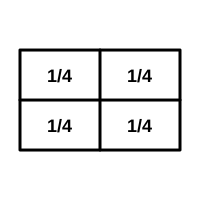 partitionMathFirst used: Week 24
- To split a shape into parts that have equal area.
- I can partition a rectangle into 6 equal parts, each 1/6 of the area.
- patternScienceFirst used: Week 6
- Something that repeats in a way you can predict.
- A swinging pendulum moves in a pattern.
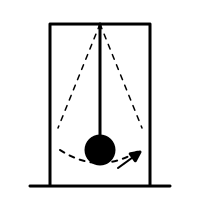 pendulumScienceFirst used: Week 6
- A weight hanging from a string or rod that swings back and forth.
- We counted how many times our pendulum swung in 10 seconds.
- pentagonMathFirst used: Week 33
- A polygon with 5 sides.
- The shape has 5 sides and 5 vertices, so it is a pentagon.
 perimeterMathFirst used: Week 30
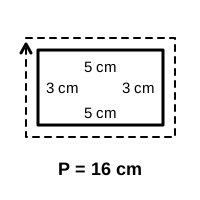
- The distance all the way around a flat shape.
- A rectangle 5 cm long and 3 cm wide has a perimeter of 16 cm.
 picture graphMathFirst used: Week 35
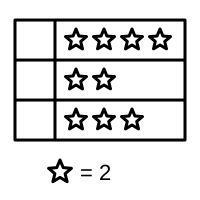
- A graph that uses pictures, with a key that tells what each picture stands for.
- In our picture graph, each star stands for 2 votes.
- place valueMathFirst used: Week 1
- The value a digit has because of its place in a number.
- In 385, the 8 is in the tens place, so its value is 80.
- point of viewELAFirst used: Week 16
- How a writer or character thinks or feels about something.
- From the cat's point of view, bath time is the worst time of day.
- polarScienceFirst used: Week 20
- Very cold, near the North Pole or South Pole.
- Emperor penguins live in the polar climate of Antarctica.
- poleScienceFirst used: Week 4
- One of the two ends of a magnet, where its push or pull is strongest.
- The north pole of one magnet attracts the south pole of another.
 polygonMathFirst used: Week 30
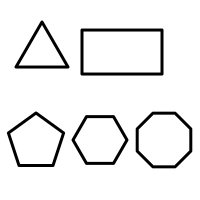
- A closed flat shape made of straight sides.
- A triangle is a polygon, but a circle is not.
 populationSocial StudiesFirst used: Week 8
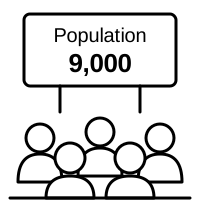
- The number of people who live in a place.
- Our town's population grew when new families moved in.
- possessiveELAFirst used: Week 2
- A word form that shows who or what owns something, like dog's or kids'.
- In "the bird's nest," bird's is a possessive.
- precipitationScienceFirst used: Week 19
- Water that falls from clouds, such as rain, snow, sleet or hail.
- Our rain gauge measured the precipitation.
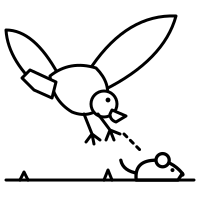 predatorScienceFirst used: Week 12
- An animal that hunts other animals for food.
- A hawk is a predator that hunts mice.
- predictScienceFirst used: Week 1
- To use what you know to tell what will happen next.
- I predict the car will roll farther on the smooth floor.
- prefixELAFirst used: Week 13
- A word part added to the beginning of a word that changes its meaning.
- The prefix re- in reread means again.
- PresidentSocial StudiesFirst used: Week 20
- The leader of the executive branch of the U.S. government.
- The President can sign a bill to make it a law.
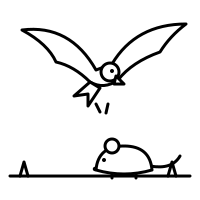 preyScienceFirst used: Week 13
- An animal that is hunted by another animal for food.
- Mice are prey for owls.
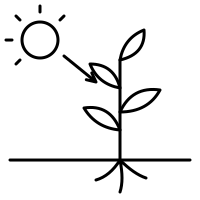 producer (in an ecosystem)ScienceFirst used: Week 10
- A living thing, like a plant, that makes its own food.
- Grass is a producer because it uses sunlight to make food.
- producer (in economics)Social StudiesFirst used: Week 25
- A person or business that makes goods or provides services.
- A farmer is a producer of corn.
- pronounELAFirst used: Week 2
- A word that takes the place of a noun, like he, she, it or they.
- In "Mia lost her hat," her is a pronoun.
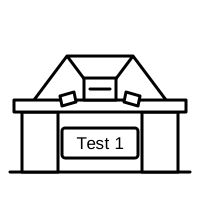 prototypeScienceFirst used: Week 7
- The first working model of a design, built to test it.
- Our prototype latch held the door, but it was hard to open.
- publishELAFirst used: Week 28
- To make a final, neat copy of your writing to share with others.
- I published my report with pictures and a title page.
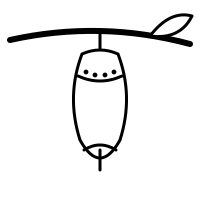 pupaScienceFirst used: Week 15
- The stage when an insect changes form inside a case.
- The monarch pupa rests inside a hard green case called a chrysalis.
Q
- quadrilateralMathFirst used: Week 33
- A polygon with 4 sides.
- Squares, rectangles and rhombuses are all quadrilaterals.
- quarter inchMathFirst used: Week 24
- One fourth of an inch on a ruler.
- The bean is 1 and a quarter inches long, to the nearest quarter inch.
- quotation marksELAFirst used: Week 3
- Marks that go around the exact words someone says or writes.
- Ana said, "Let's go to the park!"
R
- rain gaugeScienceFirst used: Week 19
- A tool that measures how much rain has fallen.
- Our rain gauge showed that 1 inch of rain fell.
- reader's theaterELAFirst used: Week 34
- Reading a script aloud with expression, like a play without costumes or a stage.
- In reader's theater, I read the part of the fox.
- rectangleMathFirst used: Week 34
- A quadrilateral with 4 square corners.
- A sheet of notebook paper is a rectangle.
- regionSocial StudiesFirst used: Week 4
- An area where places share features like land, climate or ways of life.
- The Midwest region has flat farmland and the Great Lakes.
- regroupMathFirst used: Week 2
- To trade 10 ones for 1 ten, or 10 tens for 1 hundred.
- To add 258 + 136, I regroup 14 ones as 1 ten and 4 ones.
- repeated additionMathFirst used: Week 4
- Adding the same number again and again.
- 5 + 5 + 5 is repeated addition, and it equals 3 × 5.
- researchELAFirst used: Week 17
- Finding facts about a topic by reading and checking sources.
- I did research on frogs at the library.
- reservationSocial StudiesFirst used: Week 6
- Land set aside by treaty or law as a homeland for a Native nation.
- The Navajo Nation's reservation stretches across three states.
- responsibilitySocial StudiesFirst used: Week 21
- A duty; something a person should do.
- Following the rules is a responsibility of every citizen.
- reviseELAFirst used: Week 13
- To change your writing to make it clearer or stronger.
- I revised my story by adding a stronger ending.
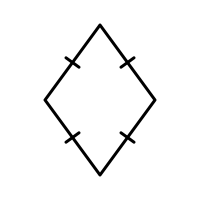 rhombusMathFirst used: Week 34
- A quadrilateral with 4 sides that are all the same length.
- Every square is a rhombus, but not every rhombus is a square.
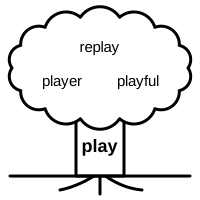 root wordELAFirst used: Week 29
- A word or word part that other words are built from.
- If I know the root word agree, I can figure out agreement.
- roundMathFirst used: Week 1
- To change a number to the closest ten or hundred.
- If I round 347 to the nearest ten, I get 350.
- rowMathFirst used: Week 4
- A line of things that goes straight across.
- The egg carton has 2 rows of 6 eggs.
 ruralSocial StudiesFirst used: Week 2
- Having to do with the countryside, where homes and towns are far apart.
- In our rural town, the nearest store is a long drive away.
S
- scarcitySocial StudiesFirst used: Week 26
- Not having enough of something for everyone to have all they want.
- Scarcity of water made the town limit lawn watering.
- sensory detailsELAFirst used: Week 11
- Words that tell how something looks, sounds, smells, tastes or feels.
- Sensory details like "hot, salty fries" make my story come alive.
- sequenceELAFirst used: Week 1
- The order in which events happen.
- I used first, next and last to tell the sequence.
- serviceSocial StudiesFirst used: Week 25
- Work people do to help others, often for pay.
- A haircut is a service.
- settingELAFirst used: Week 1
- When and where a story takes place.
- The setting of the story is a farm in winter.
- settlerSocial StudiesFirst used: Week 7
- A person who moves to a new place to live and build a home.
- Settlers built farms near the river.
- simple sentenceELAFirst used: Week 13
- A sentence with one complete thought.
- "The puppy barked" is a simple sentence.
 sourceELAFirst used: Week 17
- A place you get information from, like a book, article or website.
- I used two sources to learn about volcanoes.
- sovereign nationSocial StudiesFirst used: Week 19
- A nation that governs itself.
- Native nations are sovereign nations with their own governments.
- specializeSocial StudiesFirst used: Week 26
- To focus on making one kind of good or doing one kind of work.
- The bakery specializes in bread.
- speciesScienceFirst used: Week 30
- One kind of living thing whose members can have young together.
- All pet dogs belong to one species.
- squareMathFirst used: Week 34
- A quadrilateral with 4 equal sides and 4 square corners.
- Every square is also a rectangle and a rhombus.
- square centimeterMathFirst used: Week 28
- A square that is 1 centimeter on each side, used to measure area.
- The small sticker covers about 4 square centimeters.
- square inchMathFirst used: Week 28
- A square that is 1 inch on each side, used to measure area.
- Each space on the game board is 1 square inch.
 square unitMathFirst used: Week 28
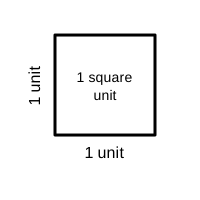
- A square with sides 1 unit long, used to measure area.
- The rectangle has an area of 20 square units.
- standard formMathFirst used: Week 1
- The usual way to write a number using digits.
- The standard form of three hundred six is 306.
- stanzaELAFirst used: Week 1
- A group of lines in a poem.
- The poem has three stanzas with four lines each.
- static electricityScienceFirst used: Week 4
- An electric charge that builds up when some things are rubbed together.
- I rubbed a balloon on my sweater, and static electricity made it stick to the wall.
- stratusScienceFirst used: Week 25
- Flat, gray clouds that spread across the sky like a blanket.
- Stratus clouds covered the sky, and a light drizzle fell.
- subject-verb agreementELAFirst used: Week 13
- When a verb matches its subject, like the dog runs and the dogs run.
- "The kids play" shows subject-verb agreement; "The kids plays" does not.
- suburbanSocial StudiesFirst used: Week 2
- Having to do with a community near a city.
- Many suburban families have yards.
- suffixELAFirst used: Week 16
- A word part added to the end of a word that changes its meaning.
- The suffix -less in fearless means without.
- summaryELAFirst used: Week 7
- A short retelling of the most important ideas in your own words.
- My summary of the article was three sentences long.
- superlativeELAFirst used: Week 19
- An adjective that compares three or more things, often ending in -est.
- Tallest is a superlative: Sam is the tallest of the three kids.
- supplySocial StudiesFirst used: Week 26
- How much of something sellers have to sell.
- When the supply of strawberries is large, prices often go down.
 Supreme CourtSocial StudiesFirst used: Week 20
- The highest court in the United States.
- The Supreme Court has nine justices.
- syllableELAFirst used: Week 1
- A word part with one vowel sound.
- Pancake has two syllables: pan and cake.
- synonymELAFirst used: Week 22
- A word that means the same or almost the same as another word.
- Big and large are synonyms.
T
- table of contentsELAFirst used: Week 1
- A list at the front of a book showing chapters and their page numbers.
- The table of contents says chapter 3 starts on page 20.
 tadpoleScienceFirst used: Week 15
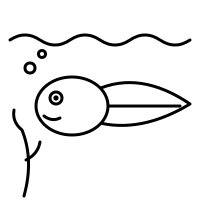
- A young frog that lives in water and breathes with gills.
- The tadpole grew back legs.
- taxSocial StudiesFirst used: Week 19
- Money people and businesses pay to the government for shared services.
- Taxes help pay for schools and fire trucks.
- temperateScienceFirst used: Week 20
- Having four seasons, with warm summers and cool or cold winters.
- Ohio has a temperate climate.
- temperatureScienceFirst used: Week 19
- How hot or cold something is.
- The temperature this morning was 50 degrees.
- text featureELAFirst used: Week 6
- A part of a text, like a heading or caption, that helps you find information.
- Bold words and diagrams are text features.
 thermometerScienceFirst used: Week 19
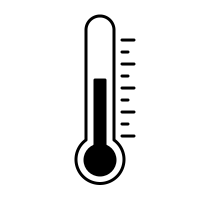
- A tool that measures temperature.
- I read the thermometer every morning.
- time-order wordsELAFirst used: Week 10
- Words like first, next, then and finally that show when things happen.
- I used time-order words to tell my story in order.
- topic sentenceELAFirst used: Week 7
- A sentence, often the first one, that tells the main idea of a paragraph.
- My topic sentence was "Frogs are amazing jumpers."
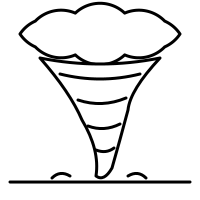 tornadoScienceFirst used: Week 21
- A spinning column of air that reaches from a storm cloud to the ground.
- During a tornado warning, go to a small inside room with no windows on the lowest floor.
- tradeSocial StudiesFirst used: Week 13
- To exchange goods or services.
- I trade my apple for my friend's orange.
- traditionSocial StudiesFirst used: Week 6
- A way of doing something that is passed down over time.
- Making tamales together is a holiday tradition in my family.
- traitScienceFirst used: Week 28
- A feature of a living thing, like color, shape or size.
- Long ears are a trait of rabbits.
- transitionELAFirst used: Week 19
- A word or phrase that helps writing move smoothly from one idea to the next.
- "For example" is a transition I use before a fact.
 trapezoidMathFirst used: Week 34
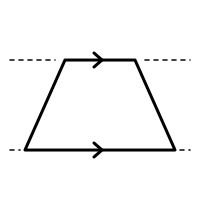
- A quadrilateral with at least one pair of sides that run the same direction.
- The lampshade shape is a trapezoid because its top and bottom run the same direction, like train tracks.
- treatySocial StudiesFirst used: Week 6
- A formal written agreement between nations.
- The United States signed treaties with many Native nations.
- tribal governmentSocial StudiesFirst used: Week 19
- The government of a Native nation, which makes its own laws.
- The Cherokee Nation has its own tribal government.
- tropicalScienceFirst used: Week 20
- Hot all year and often very rainy, near the equator.
- A rainforest near the equator has a tropical climate.
 two-step problemMathFirst used: Week 5
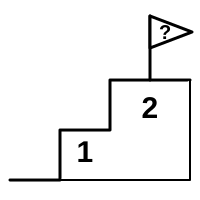
- A word problem that takes two steps to solve.
- To solve the two-step problem, I added first and then subtracted.
U
- unbalanced forcesScienceFirst used: Week 2
- Forces that are not equal, so an object starts, stops or changes speed or direction.
- When I kicked the ball, unbalanced forces made it move.
- unit fractionMathFirst used: Week 19
- A fraction with 1 as the numerator, like 1/3 or 1/8.
- One slice of a pie cut into 6 equal parts is the unit fraction 1/6.
- unknownMathFirst used: Week 3
- A number in a problem that we do not know yet.
- In 6 × n = 42, the letter n stands for the unknown, which is 7.
 urbanSocial StudiesFirst used: Week 2
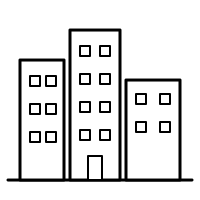
- Having to do with a city.
- Urban areas have tall buildings and busy streets.
V
- variableScienceFirst used: Week 6
- Something in an investigation that can be changed.
- The length of the string was the variable we changed.
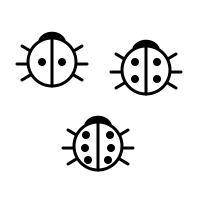 variationScienceFirst used: Week 14
- Small differences among living things of the same kind.
- The puppies in one litter show variation in fur color.
- verbELAFirst used: Week 1
- A word that shows an action or a state of being.
- Jump, swim and is are all verbs.
- verb tenseELAFirst used: Week 10
- The form of a verb that shows when something happens: past, present or future.
- I walk, I walked and I will walk show three verb tenses.
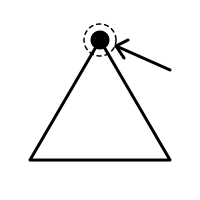 vertexMathFirst used: Week 33
- A corner where two sides of a shape meet. More than one are vertices.
- A square has 4 vertices.
- vetoSocial StudiesFirst used: Week 20
- To reject a bill so it does not become a law.
- The President can veto a bill.
- volunteerSocial StudiesFirst used: Week 1
- A person who does work to help others without being paid.
- Volunteers cleaned up the park.
- voteSocial StudiesFirst used: Week 22
- To make a choice in a group decision or an election.
- We voted on where to eat dinner.
- vowel teamELAFirst used: Week 2
- Two letters that work together to make one vowel sound.
- The ai in rain is a vowel team.
W
- wantSocial StudiesFirst used: Week 24
- Something nice to have that people can live without.
- A new video game is a want, not a need.
- warningScienceFirst used: Week 21
- An alert that dangerous weather is happening now or is about to happen.
- A tornado warning means take cover right away.
- watch (weather)ScienceFirst used: Week 21
- An alert that dangerous weather could happen, so stay ready.
- A tornado watch means stay alert and know your plan.
- weatherScienceFirst used: Week 19
- What the air is like at one place and one time.
- Today's weather is sunny and windy.
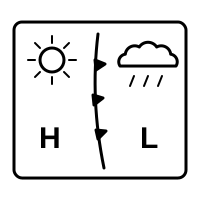 weather mapScienceFirst used: Week 25
- A map that uses symbols to show the weather in many places.
- The H on the weather map stands for high air pressure.
- wholeMathFirst used: Week 19
- One complete thing, before it is split into equal parts.
- Four fourths make one whole: 4/4 = 1.
- wind vaneScienceFirst used: Week 19
- A tool that points into the wind to show which way it is blowing from.
- The wind vane pointed north, so the wind was blowing from the north.
- word formMathFirst used: Week 1
- A way to write a number using words.
- The word form of 518 is five hundred eighteen.